‹ BackNewsPantera Capital

Pantera Capital

Pantera Capit
2026-09-30 08:31:03

Pantera says token issuance is no longer the hard part as liquidity becomes the main bottleneck

Pantera Capital’s September 2026 report on tokenization tracked 671 tokenized assets with a combined market size of $331.8 billion and argued that issuance infrastructure is no longer the industry’s main constraint. The report said the bigger challenge now sits in compliant, liquid secondary markets, where access rules, market structure, and redemption design sharply shape how tokenized assets actually trade. Across the first half of 2026, total tokenized market value slipped 0.8%, but the mix changed materially. Stablecoins fell from $302.4 billion to $295.5 billion, while non-stablecoin tokenized assets rose 13.3%, led by U.S. Treasuries, private credit, and tokenized equities. Pantera also introduced a Tokenization Progress Index, or TPI, and found that most products still function as wrappers for off-chain assets rather than fully on-chain or hybrid financial instruments. The report highlighted large liquidity gaps between open-access and permissioned products, rapid growth in stock perpetuals on platforms such as Hyperliquid and Lighter, and the use of RWA as collateral in DeFi through structures like Morpho Vaults. It also pointed to recent U.S. regulatory developments, including the SEC’s five-year conditional exemption for tokenized stock trading venues, as a possible route for permissioned secondary markets. Pantera’s broader conclusion was that the next phase of tokenization will depend less on minting more assets and more on building liquidation, privacy, and interoperability infrastructure that institutions and AI agents can actually use.

270
Pantera says token issuance is no longer the hard part as liquidity becomes the main bottleneck
Pantera says tokenized asset market reached $332 billion as institutions stepped in this quarter
RootData says 21.75% of projects backed by five major crypto VCs are marked inactive
Satsuma shows how a BTC treasury company can unwind and leave the market
ChainFeeds roundup spotlights LAPTOP memecoin backlash, OpenAI math claim, and Pantera’s compute market thesis
Pantera Capit
2026-09-10 23:55:00

Pantera Capital says compute could become a hard currency for the AI economy

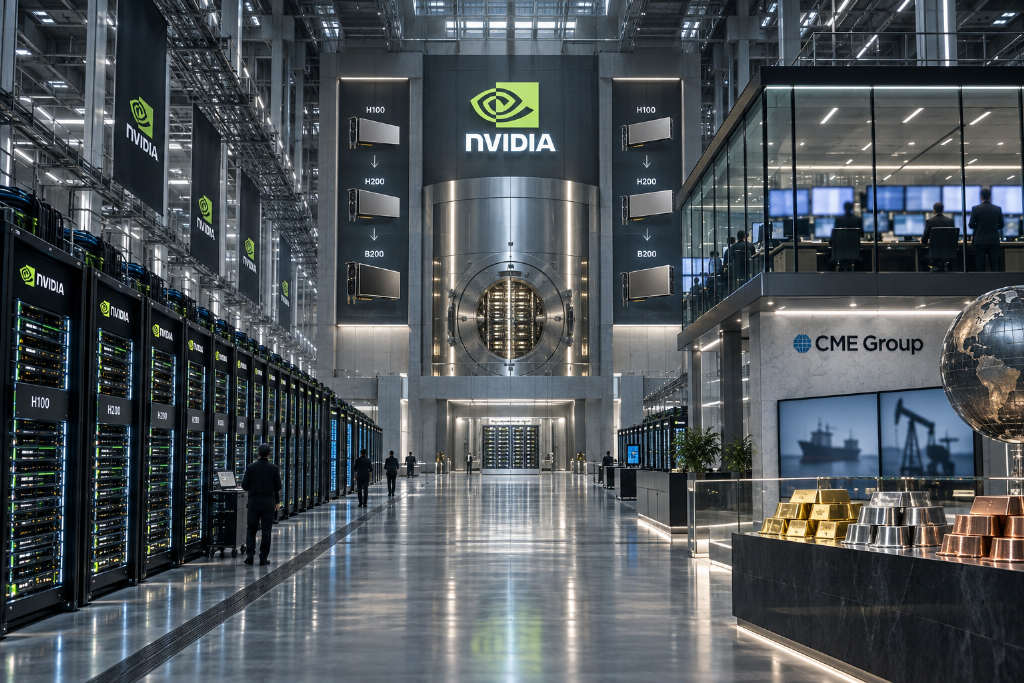
Pantera Capital partner Jay Yu argues that GPU compute is still in the early stages of financialization, but its market structure may develop in ways that resemble electricity and other physical commodities. In his view, compute is constrained by chip type, time, and geography, which makes it heterogeneous rather than perfectly fungible, yet still capable of evolving into a globally traded asset class over the next five to 10 years. The article maps the sector through layers including hardware providers, compute service operators, clusters, inference platforms, application companies, brokers, OTC desks, index builders, and derivatives venues. Yu draws repeated comparisons with U.S. power markets, where physical delivery, benchmark formation, and risk transfer tools emerged over time. He suggests compute markets may follow a similar path, with physical GPU delivery venues anchoring index construction and futures trading. The piece also describes Nvidia as a possible “central bank” for the compute economy because of its control over chip release cycles, utilization dynamics, and residual-value support policies. It identifies four broad product categories already taking shape: physical delivery, index products, derivatives exchanges, and financing tools such as lending, treasury structures, synthetic stablecoins, insurance, and other risk-transfer products. At the same time, it says the sector still faces major issues around transparency, basis risk, standardization, and quality verification.

900
Pantera Capital says compute could become a hard currency for the AI economy
Pantera Capit
2026-09-10 06:39:30

Pantera Says AI Compute Could Follow Oil and Power Into Finance, With Nvidia as a ‘Central Bank’

Pantera Capital investor Jay Yu argues that the market for AI compute is still traded in a highly primitive way despite trillion-dollar spending on data centers and compute infrastructure. In his view, GPU rentals and purchases still rely heavily on chat groups, OTC brokers, and one-to-one enterprise agreements, even as platforms such as SF Compute, Vast AI, and Runpod have emerged. He compares the current stage of the compute market to the early development of U.S. power and oil markets, where large physical demand came first and standardized contracts, pricing indices, futures, and hedging tools followed later. Yu says that over the next five to 10 years, compute represented by GPUs such as the H100, H200, and B200 could evolve from an internal IT expense into a standalone asset class that can be priced, traded, financed, and hedged. He also outlines a market structure spanning physical settlement platforms, pricing indices, derivative exchanges, and broader financialization vehicles. The report notes that CME Group has already announced a partnership with Silicon Data to plan futures products tied to GPU compute prices. Yu adds that Nvidia may sit above this system like a “central bank” because its product roadmap and residual value support can shape depreciation curves, financing conditions, and expectations around the future value of installed compute assets.

1130
Pantera Says AI Compute Could Follow Oil and Power Into Finance, With Nvidia as a ‘Central Bank’
Sydney Sweene
2026-09-10 06:25:58

Sydney Sweeney stars in Novig ad campaign and takes an equity stake in the sports prediction market

Sports prediction market Novig released its first nationwide brand ad, "Just Sports," on Sept. 9, with Sydney Sweeney appearing on screen and helping shape the campaign’s creative direction. The company said Sweeney is not just a paid spokesperson: she has also become an equity holder and a strategic partner. According to Novig CEO Jacob Fortinsky, she first approached the company as an investor because of her own interest in prediction markets, and later took a larger role in the campaign. Novig is positioning itself differently from Kalshi and Polymarket, which have expanded prediction markets across categories including elections, Federal Reserve decisions, war, technology, entertainment, and sports. Novig said it is focused only on sports and that its product, market structure, and platform features are built for sports traders. The company added that it obtained designated contract market status from the U.S. Commodity Futures Trading Commission in August, launched under a federal regulatory framework across the U.S., and keeps a minimum user age of 21. The company also tied its recent push to financing and partnerships. In February, Novig announced a $75 million Series B led by Pantera Capital, with participation from Multicoin Capital, Makers Fund, Edge Equity, Forerunner, NFX, and Perceptive Ventures, bringing total funding to more than $105 million and valuing the company at $500 million. Novig also said its 2025 trading volume grew more than 10x to an annualized $4 billion, and that it signed a multiyear deal with MLB’s New York Mets in July.

5320
Sydney Sweeney stars in Novig ad campaign and takes an equity stake in the sports prediction market